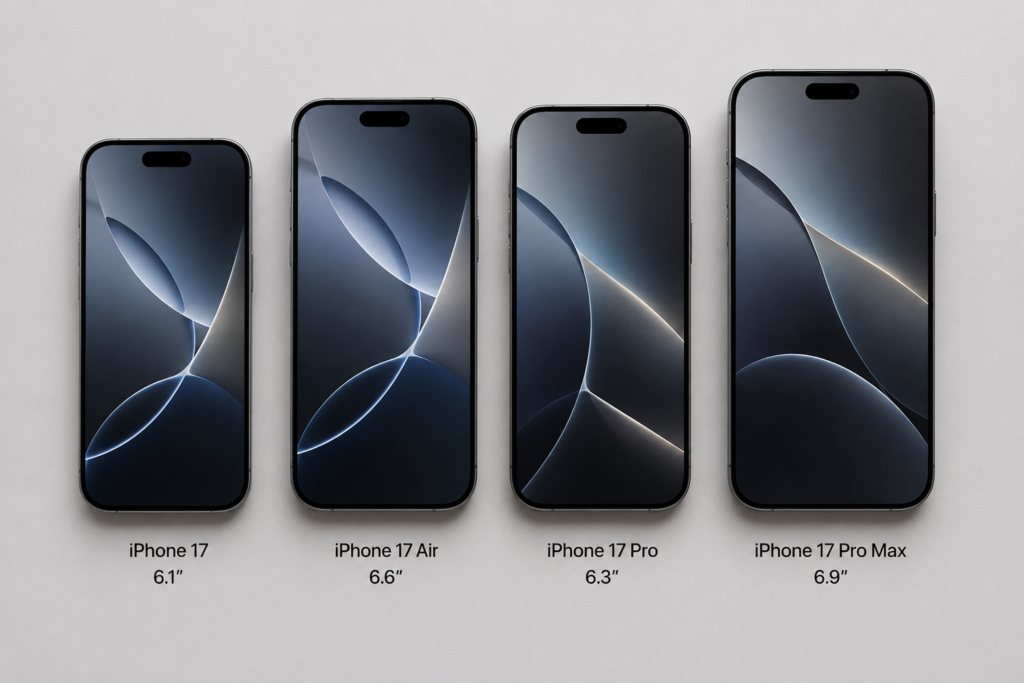
The short version
Trade in an old iPhone.
It’s the single biggest lever, worth up to $700 through Apple directly or over $1,000 through a carrier.
However, if you’re already planning to switch, don’t wait for iPhone 18.
Apple is reportedly only replacing the Pro and Pro Max in September.
The standard iPhone 18 doesn’t arrive until spring 2027.
Therefore, if you want the regular Iphone 17 or iPhone Air, waiting costs six months with no price benefit.
If you’re Pro-Max shopping specifically, the calculus is different — that model is getting replaced in a matter of weeks, and UK retailers are already discounting current stock ahead of the launch. Refurbished saves a real but modest ~15% right now, the Apple student discount doesn’t apply to iPhones at all despite the common assumption that it does, and carrier “free phone” deals are real money only if you were already going to commit to that carrier’s unlimited plan for two to three years.
Money-saving methods, ranked by realistic impact
| Method | Realistic savings | The catch | Best for |
|---|---|---|---|
| Trade in through Apple directly | Up to ~$700 credit, unconditional | Apple’s own values run lower than the most aggressive carrier deals | Anyone with a working iPhone 12 or newer, who wants no strings attached |
| Trade in through a carrier + new/upgraded line | $600–$1,000+ off (T-Mobile, Verizon, Xfinity) | Requires a new line or an unlimited plan; bill credits spread over 24–36 months | Someone already planning to switch carriers or add a line |
| Buy Apple-certified or marketplace refurbished | ~15% off (about $120 on a $829 unlocked iPhone 17) | Only the base 256GB model is widely available refurbished this early; confirm battery health | Budget buyers fine with 256GB, no interest in unboxing a sealed box |
| Skip waiting for iPhone 18 (standard model) | $0 saved by waiting — arguably a loss | Base iPhone 18 doesn’t ship until spring 2027; iPhone 17 won’t get cheaper in the meantime | Anyone considering the regular iPhone 17 or iPhone Air |
| Buy Pro/Pro Max stock as the Sept. 8–9 event approaches | Retailer discounts already appearing on current Pro Max stock in the UK | US-specific discount depth wasn’t confirmed as of this research | Pro/Pro Max shoppers only — this model is being replaced imminently |
| “Free with unlimited plan” carrier promos | Effectively $600–$1,000+, but only if you needed that plan anyway | You’re financing the “free” phone through 2–3 years of a specific premium plan | Someone already committed long-term to that carrier |
| Apple/education student discount | $0 | Doesn’t apply to iPhone at all — only Mac, iPad, Watch, and accessories | Nobody, for this purchase — use it on a Mac or iPad instead |
| Buy unlocked without activating at purchase | Avoids an activation-lock scenario | Apple’s advertised $799 already bakes in a $30 “connectivity discount” that requires carrier activation at checkout — buying with no activation runs closer to $829 | Buyers who want a truly unlocked phone with no carrier commitment |
Should you actually wait for iPhone 18?
This is the question that matters, and the answer depends on which Iphone 17 you’re shopping for.
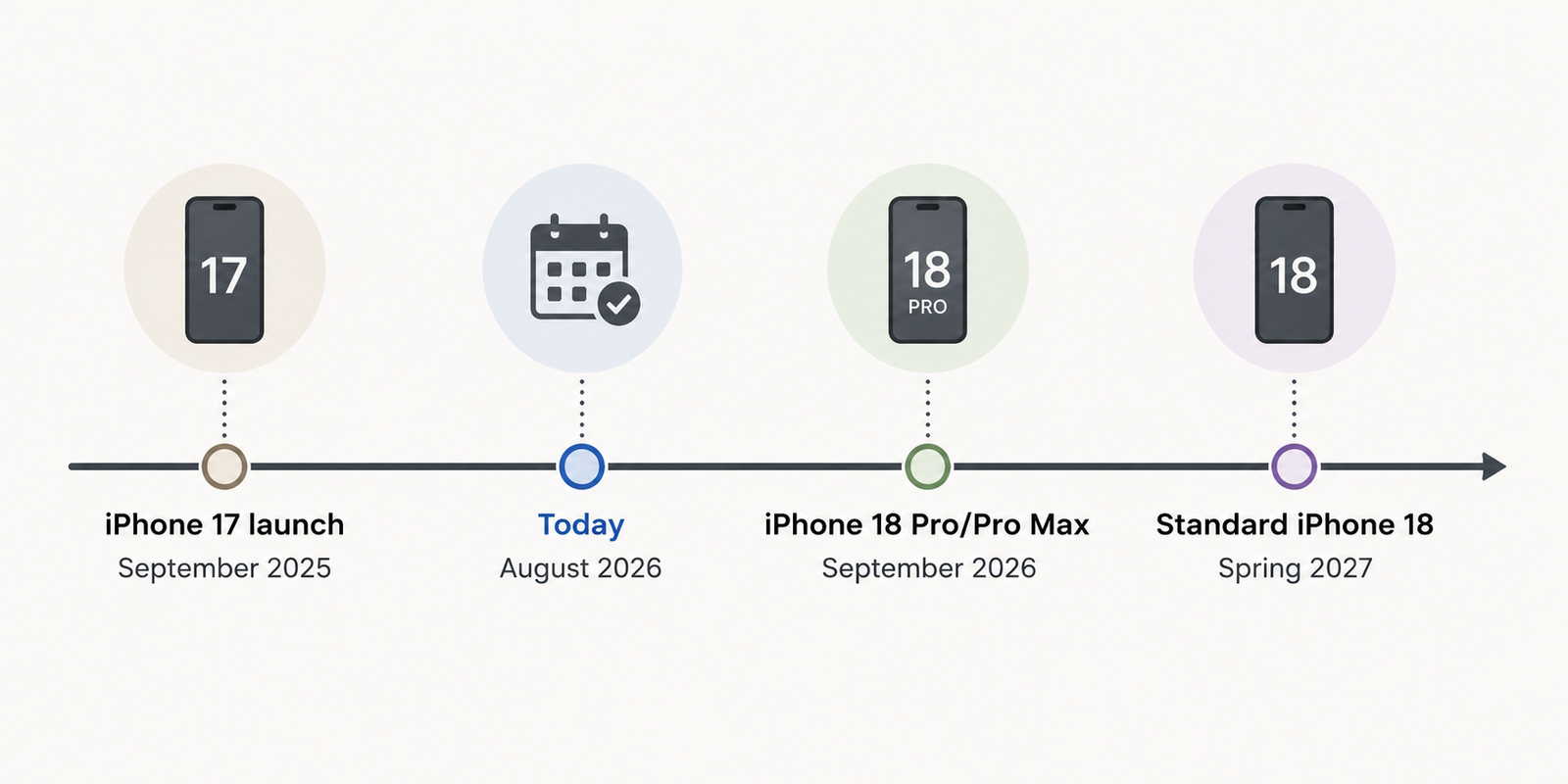
However, Apple is expected to hold a launch event around September 8–9, 2026.
MacRumors’ September preview indicates Apple isn’t releasing a standard iPhone 18 that week.
Instead, the event is expected to cover the iPhone 18 Pro and Pro Max, alongside a rumored foldable iPhone.
The standard iPhone 18, an iPhone 18e, and an iPhone Air 2 aren’t expected until spring 2027.
Note: this timeline comes from pre-event rumors and analyst synthesis, not an official Apple announcement.
Therefore, re-confirm it hasn’t shifted before publishing.
That timing split matters directly to your wallet. If you want the regular iPhone 17 or the iPhone Air, there’s no successor coming in September at all — the model you’d buy today stays Apple’s current standard offering for another six-plus months. MacRumors’ own buy-now-or-wait analysis put it plainly: “there won’t be a monetary benefit to waiting,” since older iPhone models don’t reliably drop in price after a launch event the way people assume, and trade-in values for your current phone only get worse the longer you hold onto it. The same analysis notes early rumors suggest the eventual standard iPhone 18 could use cheaper components — a lower-quality screen and fewer GPU cores have both been mentioned — which, if accurate, would make it a weaker value than the current iPhone 17, not a better one.
If you’re specifically shopping for a Pro or Pro Max, the calculation flips. That tier is getting replaced within weeks, and the early signs of that transition are already visible: UK retailers Amazon and John Lewis cut the iPhone 17 Pro Max from £1,199 to £1,099 on August 19, 2026 as they cleared stock ahead of the new Pro lineup.
[UNVERIFIED: whether US retailers are running an equivalent discount on iPhone 17 Pro Max stock — this research pass confirmed the UK price cut but did not find a matching confirmed US retailer discount as of the same date.]
If you don’t need the newest chip immediately, waiting a few weeks to see how US Pro Max pricing moves after the September event is a reasonable, low-risk bet. If you need a phone now, buying today and trading in for whatever comes next later is the more practical path — see the note above on trade-in value only declining over time.
One rumor worth naming and dismissing. A leak in early August suggested Apple might raise iPhone 17 prices ahead of the September event. However, reporting on that rumor traced it to a single low-credibility leaker who openly admits there’s some doubt. No price increase has actually materialized as of this writing. Additionally, don’t let that rumor push you into buying faster than your trade-in or carrier deal actually requires.
What each iPhone 17 tier actually costs — and the catch in the headline price
Apple’s own US pricing, as listed on its site: the iPhone 17e starts at $599 [UNVERIFIED: exact storage tier paired with this price wasn’t independently re-verified], the iPhone 17 starts at $799, the iPhone Air starts at $999, and the iPhone 17 Pro starts at $1,099. [UNVERIFIED: iPhone 17 Pro Max’s exact current starting price — this research pass did not return a clean, confirmed figure directly from Apple’s own live buy page; expect it to land above the Pro’s $1,099 based on historical pricing patterns, but confirm before publishing.]
Two catches sit inside those headline numbers. First, the $799 iPhone 17 price already includes what Apple calls a “$30 connectivity discount that requires carrier activation” at the time of purchase — buy it truly unlocked with no activation, and the real price is closer to $829. Second, Apple dropped the 128GB base storage tier this generation: the iPhone 17 now starts at 256GB, so there’s no smaller, cheaper storage option to downgrade to the way there used to be. If you’re comparing this generation’s “starting price” against an older iPhone’s starting price, you’re not comparing the same amount of storage.
Trade-in: the single biggest lever, and it just got bigger
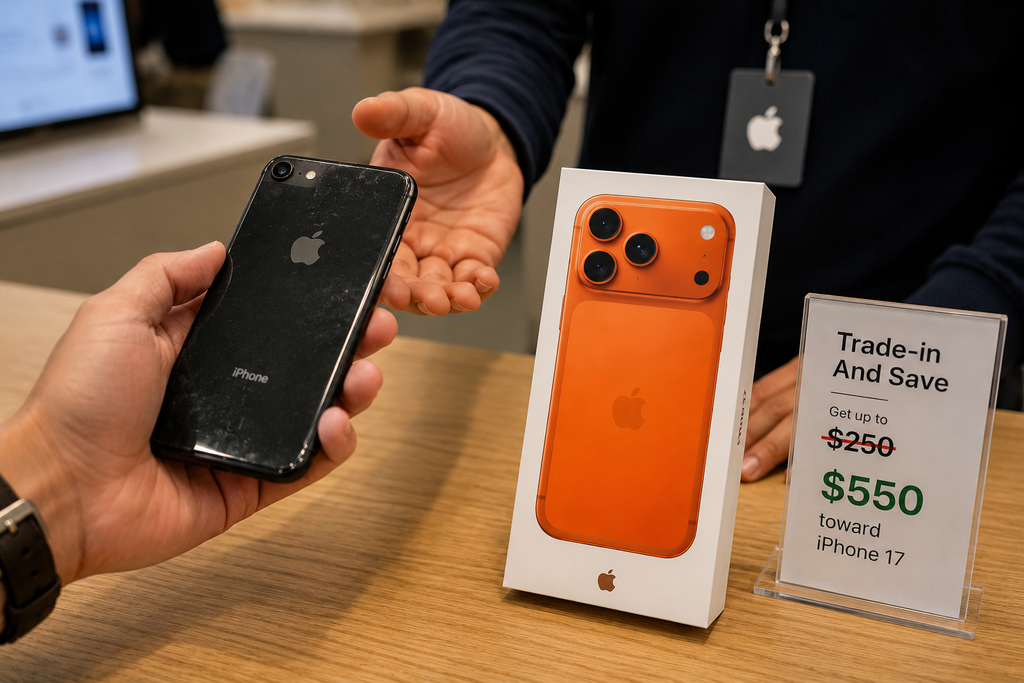
Apple raised its trade-in values across most iPhone models on August 6, 2026 — some devices gained close to 30% compared to the previous update in May. A few concrete examples from that update: the iPhone 16 Pro Max’s trade-in value rose from $695 to $720, the iPhone 16 Pro from $560 to $630, the iPhone 15 Pro Max from $490 to $530, and the iPhone 14 Pro Max from $375 to $405. If you’ve been sitting on an old iPhone, this is a genuinely good moment to trade it in — those values move with market conditions and tend to decline as newer models launch, not improve.
Apple’s own trade-in program offers up to roughly $700 in credit depending on your device and condition, with no strings beyond the trade-in itself. Carriers can beat that number substantially — Best Buy has matched trade-in credit up to $1,100, and Verizon’s promotions have run up to $1,000 off — but always in exchange for a new line, an upgraded unlimited plan, or both, with the value delivered as bill credits over 24 to 36 months rather than an instant discount. If you leave that carrier or downgrade your plan before the credits finish, you typically forfeit what’s left. Read that fine print before assuming the carrier deal beats Apple’s straightforward credit.
The carrier bill-credit trap
T-Mobile, Verizon, AT&T, Boost Mobile, and Xfinity Mobile were all running iPhone 17 trade-in promotions as of August 2026 [UNVERIFIED: these figures come from a single secondary-source snapshot rather than each carrier’s own live offer page, and carrier promotions change frequently — re-verify current terms before publishing], several advertising the phone as effectively free with an unlimited plan and trade-in. The advertised numbers are real, but they’re financed through your monthly bill over two to three years, not delivered upfront — Boost’s “free or $7.50/month” offer, for instance, requires its $65/month Infinite Access plan, meaning the “savings” only make sense if you were already planning to pay for a plan at that tier.
One specific change worth knowing: T-Mobile ended its any-condition trade-in perk around the iPhone 17 launch, which previously let customers trade in broken or malfunctioning phones for substantial credit — as recently as the prior December, that program had offered up to $1,000 off an iPhone 16 Pro for a phone in any condition. That perk no longer applies to iPhones on T-Mobile (Galaxy trade-ins reportedly still qualify), so a cracked-screen iPhone that used to be worth real money there isn’t anymore. If your trade-in device has damage, get a real quote before assuming the promo you’ve seen advertised applies to your specific phone.
Refurbished and open-box: real savings, real caveats
Marketplace refurbished iPhone 17 units were running about $707 for a 256GB model at Back Market as of mid-2026, against roughly $829 for the same configuration new and unlocked from Apple — about $120, or 15%, in savings. Amazon Renewed and eBay Refurbished were pricing similar units slightly higher, around $755 and $729 respectively, with eBay offering up to a two-year warranty against Back Market’s one year with a 30-day return window.
Because the iPhone 17 only launched in September 2025, refurbished units this early in the phone’s life should carry high battery health — 90% or above is a reasonable expectation, well above the 80% industry-standard minimum — but confirm the stated battery health before buying rather than assuming it. Supply is also limited to mostly the base model in 256GB right now; Pro models are scarce in the refurbished market this early, and the cheapest listings sell out quickly. Given how new the hardware is, the cosmetic difference between a “Good” and “Excellent” condition grade tends to be small, so paying the modest premium for the higher grade is usually worth it on a device this recent.
The student discount myth
A lot of shoppers assume Apple’s education pricing applies to iPhones the way it does to Macs and iPads. It doesn’t. Apple’s education store discount covers Mac, iPad, and Apple Watch (plus accessories), but iPhones are excluded entirely — there’s no education-priced iPhone 17 at any storage tier. The current back-to-school promotion running through August 27, 2026 offers up to a $150 gift card, but only with a qualifying Mac or iPad purchase, not a standalone iPhone purchase. If you’re a student hoping to stack an education discount onto an iPhone 17, that saving doesn’t exist — put the education discount toward a Mac or iPad instead, and use one of the methods above for the phone itself.
Common mistakes buyers make
Assuming the advertised “free phone” carrier deal is free is the most expensive mistake on this list — it’s a phone paid off through a specific plan over two to three years, and switching or downgrading early forfeits what’s left. A close second is trading in a damaged iPhone at T-Mobile expecting the old any-condition program, which no longer applies. Buyers also frequently assume waiting for a new iPhone generation automatically makes the current one cheaper — that’s true for the Pro/Pro Max tier this cycle, given the imminent September replacement, but not for the standard iPhone 17 or iPhone Air, which have no direct successor until spring 2027. And it’s easy to compare this year’s “$799 starting price” against a past generation’s headline price without noticing Apple quietly dropped the 128GB tier — you’re now comparing 256GB to what used to be a smaller, cheaper base configuration.
Who should buy which approach
Someone upgrading from an iPhone 13 or older sitting unused in a drawer should trade it in directly through Apple first — current values are elevated and a genuinely working older iPhone is worth real money right now. Someone already planning to switch carriers or add a line anyway should compare that carrier’s trade-in-plus-plan deal against Apple’s flat credit, since the carrier route can beat it substantially if the multi-year commitment was happening regardless.
A budget-focused buyer who doesn’t need brand-new-in-box should look at Back Market or another refurbished marketplace for the base 256GB model, saving roughly 15% with a confirmed battery health check. A Pro or Pro Max shopper who can wait a few weeks should hold off through the September 8–9 event and watch for the kind of stock-clearing discounts already showing up in the UK.
Anyone considering the regular iPhone 17 or iPhone Air should stop waiting — there’s no successor coming for six-plus months, and the only thing that gets worse by waiting is your current phone’s trade-in value. And a student assuming they’ll get an education discount on the phone itself should redirect that expectation to a Mac or iPad purchase instead, where the discount actually applies.
FAQ
Should I wait for iPhone 18 before buying an iPhone 17?
Only if you specifically want a Pro or Pro Max — that tier is reportedly being replaced at Apple’s September 8–9, 2026 event. If you want the regular iPhone 17 or iPhone Air, there’s no reason to wait: Apple isn’t expected to replace those until spring 2027, and iPhone prices don’t reliably drop after a launch event the way people assume.
Does the Apple student discount apply to the iPhone 17?
No. Apple’s education pricing covers Mac, iPad, and Apple Watch, but excludes iPhone entirely, at every storage tier. The current back-to-school promotion’s gift card also requires a qualifying Mac or iPad purchase, not a standalone iPhone purchase.
What’s the best way to trade in an iPhone for credit toward an iPhone 17?
Compare Apple’s direct trade-in credit (up to roughly $700, no strings attached) against a carrier’s trade-in-plus-plan deal (up to $1,000+ through Verizon or Best Buy’s matched offer), and only take the carrier route if you were already planning to commit to that carrier’s plan for two to three years — the higher value comes as bill credits, not cash, and you forfeit what’s left if you leave early.
Is a refurbished iPhone 17 worth buying this early in its lifecycle?
Yes, with a caveat: savings run about 15% (roughly $120 on a $829 unlocked model) versus new, and battery health should be high (90%+) given the phone only launched in September 2025 — but confirm the stated battery health before buying rather than assuming it, and expect the Pro models to be scarce in the refurbished market this early.
Did Apple actually raise iPhone 17 prices in August 2026?
No confirmed increase happened. A rumor to that effect circulated in early August, traced to a single leaker who admitted uncertainty about the claim, and no price change has materialized. Current published Apple pricing (iPhone 17 from $799, iPhone 17 Pro from $1,099) reflects the original launch pricing as of this research.
Why does the iPhone 17’s advertised $799 price feel misleading?
Because it already includes a $30 “connectivity discount” that requires activating carrier service at the time of purchase. Buying the same phone truly unlocked with no activation runs closer to $829 — worth knowing if you plan to activate service later or use a different carrier’s SIM.